
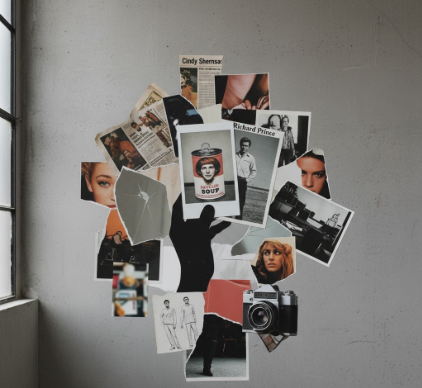
I used to think appropriation in art was this clear-cut theft scenario, you know?
But then I started looking at the Pictures Generation—this loose collective of artists working in New York during the late 1970s and early 1980s—and honestly, everything I thought I understood about originality just kind of unraveled. Artists like Sherrie Levine, Richard Prince, Cindy Sherman, and Barbara Kruger weren’t just borrowing images from mass media, advertising, and film; they were systematically dismantling the whole notion that an artist needed to create something from scratch to make it meaningful. Levine’s After Walker Evans series, where she literally re-photographed Evans’ Depression-era portraits, felt almost confrontational when I first encountered it—like she was daring us to ask what authorship even means anymore. And here’s the thing: she wasn’t trying to hide what she was doing. The appropriation was the point, the entire conceptual framework that made the work pulse with ideas about ownership, gender, and the art market’s obsession with singular genius.
Prince did something similar with his Cowboy series, re-photographing Marlboro advertisements and stripping away the text. What remained was this strange, hollow mythology of American masculinity—still seductive, still recognizable, but now exposed as pure construction.
The Machinery of Images and How They Recirculate Through Our Visual Bloodstream
Wait—maybe I should back up a second. The Pictures Generation didn’t emerge in a vacuum; they were responding to a specific cultural moment when images were proliferating at an unprecedented rate through television, magazines, billboards, basically everywhere you looked. Jean Baudrillard was writing about simulacra around the same time, arguing that we’d entered an era where copies had replaced originals as the dominant mode of experience, and these artists seemed to be testing that theory in real time. Sherman’s Untitled Film Stills (1977-1980) featured the artist herself performing various female stereotypes from 1950s and 60s B-movies—except none of these films actually existed. She was creating stills for movies that never were, which meant the nostalgia we felt looking at them was nostalgia for something that had never been real in the first place, just an amalgamation of cultural memory and cinematic cliché. I guess it makes sense that this would mess with people’s heads, the idea that an image could carry all this emotional weight without any authentic origin point.
Kruger took advertising’s visual language—bold text over black-and-white photographs—and weaponized it against consumerism itself. Her famous piece Your Body is a Battleground (1989) used appropriated imagery to critique the very systems that produced and circulated such images, and the irony wasn’t lost on anyone when her aesthetic eventually got appropriated back into actual advertising.
Turns out, appropriation has this weird recursive quality.
When Copying Becomes Commentary and the Legal System Struggles to Keep Up
The Pictures Generation’s influence on contemporary visual culture is kind of staggering when you map it out, though I’ll admit the connections can get messy and contradictory. Today’s remix culture—everything from memes to Instagram collages to artists like Hank Willis Thomas and Kara Walker who sample historical imagery—owes a conceptual debt to what these artists established in the late 70s and early 80s. They created a template for using existing images as raw material, for treating visual culture as a kind of shared language that could be quoted, manipulated, and recontextualized to generate new meanings. But here’s where it gets complicated: the Pictures Generation was working in a mostly analog world with a relatively limited circulation of their work through galleries and museums, whereas appropriation today happens at internet scale, instantly, globally, often without any institutional framework at all. Prince’s Instagram screenshots, where he appropriated other people’s posts and sold them for tens of thousands of dollars, sparked outrage in 2014—and definately tested the boundaries of what constitutes transformative use under copyright law.
The legal battles have been fascinating and frustrating in equal measure. Cariou v. Prince (2013) established that Prince’s use of photographer Patrick Cariou’s images was fair use because it transformed them sufficiently, but what “sufficiently” means remains maddeningly vague and case-dependent.
The Paradox of Appropriation Art Becoming Valuable Precisely Because It Questions Value
I’ve seen Levine’s photographs sell for hundreds of thousands of dollars at auction, which creates this almost absurd situation where art that was meant to critique authorship and commodification becomes incredibly commodified itself. The art market has this impressive ability to absorb its own critique and turn it into product, and I think the Pictures Generation artists knew this would happen—or at least suspected it might. Sherman’s film stills now hang in major museums worldwide; Kruger’s phrases have been screen-printed onto countless tote bags and T-shirts, often without irony or awareness of their original critical intent. There’s something both triumphant and exhausting about watching appropriation strategies recieve institutional validation while simultaneously being stripped of their subversive potential through endless recycling. Maybe that’s the final lesson of the Pictures Generation: in a visual culture built on endless reproduction and circulation, there’s no stable position outside the system from which to critique it. You’re always already inside the machinery, even when—especially when—you’re trying to reveal how it works. Anyway, that’s where I’ve landed on this, though I reserve the right to contradict myself tomorrow after I’ve had more coffee and less existential dread about image saturation.


