
I used to think landscape photography was just about finding the prettiest vista and clicking the shutter.
Then I stumbled across a gallery show in Portland—maybe 2019, maybe 2020, honestly the years blur—and saw these stark, almost aggressive images of strip malls and half-built subdivisions. They weren’t beautiful in any conventional sense. The compositions were flat, the subjects mundane, the aesthetic deliberately anti-romantic. But I couldn’t look away. The curator mentioned something about “New Topographics,” and I went home and fell down a rabbit hole that completely reconfigured how I understand contemporary landscape work. The movement—if you can call a 1975 exhibition at the George Eastman House a movement—featured photographers like Robert Adams, Lewis Baltz, and Bernd and Hilla Becher, who rejected the grandiose wilderness tradition of Ansel Adams (no relation, ironically) and turned their lenses toward parking lots, industrial parks, and tract housing. It was landscape photography that acknowledged humans had already reshaped pretty much everything, and pretending otherwise was, well, a kind of lie.
Here’s the thing: that aesthetic didn’t just fade away after the 70s. You see its DNA everywhere in contemporary photography, from Edward Burtynsky’s massive aerial views of industrial scarring to Mishka Henner’s deadpan documentation of feedlots and oil fields. The influence isn’t always obvious—it’s more like a conceptual framework that permeates how younger photographers approach their subjects.
Why Boring Subjects Became Radical (And Still Are)
The New Topographics photographers did something that felt almost antagonistic at the time: they made the everyday environment—gas stations, warehouses, suburban sprawl—worthy of serious aesthetic consideration. Before this, landscape photography in the American tradition was dominated by wilderness sublime, the idea that nature’s grandeur could inspire spiritual transcendence. But by the mid-70s, that wilderness was mostly carved up, paved over, or managed by the National Park Service. Robert Adams’s images of Colorado Springs didn’t celebrate or condemn the sprawl; they just presented it with an eerie neutrality that forced viewers to confront what we’d actually built. And that neutrality, that refusal to editorialize, became a kind of ethical stance. Contemporary photographers like Joel Sternfeld and Alec Soth inherited this approach—they document the constructed landscape without heavy-handed judgment, letting the images accumulate meaning through repetition and context.
The Aesthetic of Detachment (Which Is Actually Not Detached At All)
Wait—maybe “detachment” isn’t quite right.
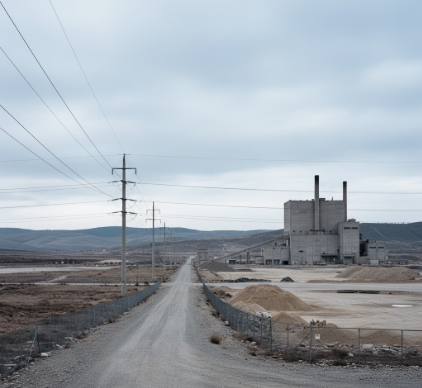
The New Topographics images look clinical, with their centered compositions and even lighting, but there’s an emotional undercurrent that’s hard to pin down. It’s not anger exactly, more like a weary acknowledgment of complicity. Lewis Baltz’s photographs of construction sites in Southern California are formally rigorous, almost minimalist, but they’re also quietly devastating. You’re looking at the machinery of environmental destruction rendered as geometric abstraction. That tension—between formal beauty and ecological unease—is everywhere in contemporary landscape work now. Photographers like Victoria Sambunaris and David Maisel create images that are simultaneously gorgeous and unsettling, pulling you in with composition and color while depicting clearcuts, mining operations, or toxic waste sites. It’s a visual strategy that implicates the viewer: you’re complicit in finding beauty here, in these places we’ve wrecked.
Seriality and the Power of Accumulation Over Single Iconic Images
One thing the Bechers pioneered—and this might be their most lasting contribution—was the idea of typological series. They photographed water towers, grain silos, and blast furnaces in a deadpan, frontal style, presenting them in grids that emphasized similarity and difference. Any single image might seem unremarkable, but the accumulation creates a kind of industrial taxonomy, a way of seeing patterns in the built environment. Contemporary photographers have run with this concept in every direction imaginable. Taryn Simon’s taxonomic projects, Ed Ruscha’s street photography books, even Instagram feeds organized around specific subjects—they all owe something to the Bechers’ methodical approach. The power isn’t in the individual frame; it’s in the series, the way repeated looking generates insight.
How Digital Tools Amplified (and Complicated) the New Topographics Legacy
Honestly, I wonder what Robert Adams would make of Google Earth.
The digital revolution gave contemporary photographers tools the New Topographics generation could barely imagine—satellite imagery, drones, computational photography, algorithmic image-making. Mishka Henner doesn’t even use a camera for some of his work; he appropriates images from Google Maps and subjects them to intense scrutiny. The conceptual foundation is pure New Topographics—document the landscape we’ve actually created, not the one we wish existed—but the scale and methodology are completely transformed. Thomas Ruff’s “jpeg” series takes low-resolution web images and blows them up to massive sizes, foregrounding the digital artifacts and compression. It’s landscape photography that’s explicitly about mediation, about the fact that most of us experiance landscapes through screens now, not direct observation. The New Topographics photographers were skeptical of romantic aestheticization; contemporary digital practitioners are skeptical of the image itself, interrogating how photography constructs rather than captures reality. But the throughline is clear: a commitment to showing the world as it is, not as we’d like it to be, even when—especially when—that’s uncomfortable.


