
I used to think vernacular photography was just a fancy term for snapshots people didn’t care about.
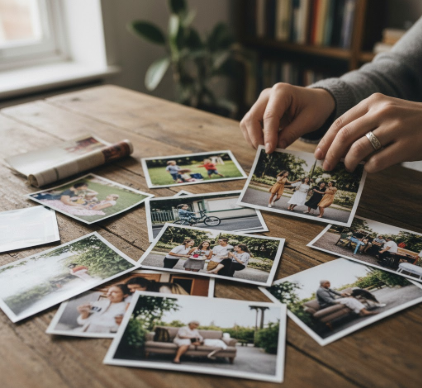
Turns out, the entire history of how we document daily life—birthdays, graduations, that weird sandwich you ate last Tuesday—sits on the shoulders of what academics call “vernacular” images: the unpolished, non-professional photos that flood shoeboxes, hard drives, and Instagram feeds. These aren’t gallery pieces. They’re the visual diary of ordinary existence, and honestly, they’ve shaped modern visual culture more than most museum collections ever will. Walker Evans spent years collecting anonymous postcards and family portraits because he understood something crucial: the grammar of everyday photography, with its awkward poses and cluttered backgrounds, teaches us how to see ourselves. The aesthetics of the accidental—blurry motion, red-eye, thumb partially covering the lens—have become deliberate choices in contemporary art and design. What was once mistake is now style.
Here’s the thing: platforms like Instagram didn’t invent casual visual documentation. They just digitized a practice that’s been around since the Brownie camera made photography accessible to non-professionals in the early 1900s. People have always wanted to freeze mundane moments, and the technology just keeps getting easier.
When Amateur Snapshots Started Defining Professional Aesthetics Without Anyone Really Noticing
The crossover happened gradually, maybe starting in the 1960s when photographers like Garry Winogrand and Lee Friedlander started mimicking the chaotic framing of family albums. Their work looked accidental—tilted horizons, random passersby, harsh flash—but it was calculated appropriation of vernacular language. Fashion photography followed in the ’90s with the “heroin chic” era: grainy, washed-out images that could’ve been taken by someone’s older cousin at a house party. Now scroll through any brand’s social feed and you’ll see the same aesthetic: deliberate imperfection, the studied casualness that vernacular photography pioneered without trying.
Wait—maybe that’s the point.
The influence runs deeper than style, though, because vernacular photography democratized who gets to control visual narratives. Before smartphones, before Polaroids, before even Kodak’s “you press the button, we do the rest” campaign, visual documentation was the domain of professionals or wealthy hobbyists. Family histories existed in text or memory, not images. The explosion of amateur photography in the 20th century meant working-class lives, immigrant experiences, and marginalized communities could finally create their own visual archives. These images didn’t follow compositional rules or artistic movements—they followed emotional logic. A photo existed because someone wanted to remeber a moment, not because it would look good on a wall. And that authenticity, that refusal to perform for an imagined critic, has become the most sought-after quality in contemporary visual culture.
The Accidental Archive Problem That Nobody Wants to Talk About Directly
We’re drowning in vernacular images now. The average person takes roughly 20-30 photos per day, give or take, which means billions of images generated annually that will never be printed, organized, or even looked at again. Cloud storage companies are essentially digital shoeboxes on an unimaginable scale. And here’s where it gets weird: future historians and anthropologists will have more raw visual data about our era than any previous period, but most of it will be inaccessible or incomprehensible without context. A photo of your coffee means nothing without the caption about your terrible morning or the friend who texted you right before.
I guess it makes sense that we’re obsessed with metadata now.
How Vernacular Visual Language Became the Default Mode for Authenticity Marketing Campaigns
Brands spent decades trying to look polished and professional, then suddenly realized that consumers trust messy realness more than perfection. The shift happened fast—maybe too fast. Now every corporate social media account tries to sound like a person and look like a casual friend’s photo dump. They hire photographers to make products look like they were captured spontaneously on an iPhone, even though the “casual” shot required three lighting setups and forty takes. It’s vernacular photography as performance, which kind of defeats the original purpose but also proves how completely the aesthetic has won. We’ve reached a point where professional photography imitates amateur photography imitating professional photography from an earlier era, and honestly, I can’t tell if that’s clever or just exhausting.
The Emotional Infrastructure Built Into Every Badly Composed Family Photo Ever Taken
There’s something about a slightly out-of-focus image of someone you love that hits differently than a perfectly composed portrait. Maybe it’s because the imperfection signals genuine moment over staged performance. Maybe it’s because our brains associate vernacular visual language with memory itself—we don’t remember our lives in perfectly lit, well-composed scenes. We definately remember them as fragments, emotional flashes, the visual equivalent of a run-on sentence. Vernacular photography captures that. It doesn’t try to impose order on chaos; it just documents the chaos and trusts that meaning will emerge later, when you’re looking through old photos at 2 AM and suddenly understand something about who you used to be.


