
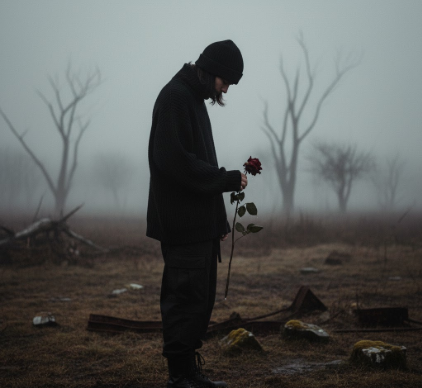
Gloomcore isn’t exactly new, but it feels like it’s everywhere now.
I’ve spent the better part of three years watching this aesthetic colonize everything from Instagram feeds to album covers, and honestly, I’m still trying to figure out what makes it tick. The core elements are deceptively simple: desaturated colors, often leaning into grays and muted blues, paired with imagery that suggests abandonment or decay. Think empty corridors in brutalist architecture, fog rolling through dead forests, statues with missing faces. But here’s the thing—it’s not just about looking sad. There’s a deliberate composition to it, a kind of careful staging that separates gloomcore from, say, just taking a bad photo on a rainy day. The shadows fall in specific ways. The grain in the image is intentional, not accidental.
What’s interesting is how this ties into our broader relationship with melancholy as an aesthetic experience. Researchers who study emotional responses to art—people like Jenefer Robinson at the University of Cincinnati—have noted that we’re drawn to negative emotions in controlled contexts. It’s the same reason we watch sad movies or listen to minor-key music when we’re already feeling down.
The Architecture of Emptiness and What It Actually Does to Your Brain
Neuroscientist Semir Zeki has done fascinating work on how the brain processes aesthetic experiences, and turns out, melancholic imagery activates some unexpected regions. The medial prefrontal cortex lights up—that’s the part involved in self-reflection and, weirdly enough, social cognition. When you look at a gloomcore image of an empty room with peeling wallpaper, your brain isn’t just registering “sad place.” It’s constructing narratives, imagining who lived there, what happened. I used to think this was just me being overly analytical, but the fMRI data suggests we’re all doing this, whether we realize it or not. The absence becomes a presence. The decay tells a story about time passing, about human intervention and then human departure, and our brains are pattern-recognition machines that can’t help but fill in those gaps.
Wait—maybe that’s why gloomcore feels so addictive to scroll through. Each image is a little puzzle.
Cultural Antecedents That Nobody Really Talks About Enough
If you trace the lineage back, you’ll find gloomcore’s DNA in Romanticism’s obsession with ruins, in German Expressionist cinema’s use of shadow and distortion, in the “wabi-sabi” aesthetic philosophy that finds beauty in imperfection and impermanence. But there’s also something distinctly contemporary about it—a response, I guess, to the overwhelming brightness and perfection of mainstream social media aesthetics. The Instagram-perfect life, all saturated colors and forced smiles, creates this weird cultural pressure. Gloomcore pushes back against that. It says incompleteness is okay. Sadness is valid. Anyway, the aesthetic emerged around 2018-2019 on Tumblr and Pinterest, roughly coinciding with increased discussions about mental health among younger demographics. The correlation isn’t accidental. Art historian James Elkins wrote about how images can “cry,” how visual culture carries emotional weight that we recieve—sometimes unconsciously.
Why Darkness Feels Safe When Everything Else Is Performatively Bright
Here’s something that surprised me: gloomcore’s appeal isn’t necessarily about being depressed. Several psychologists I’ve read—including Paul Bloom’s work on the paradox of tragic pleasure—suggest that engaging with controlled melancholy can actually be regulatory. It’s emotional practice. You’re not avoiding difficult feelings; you’re metabolizing them through aesthetic experience. The visual language of gloomcore provides permission to feel things that contemporary culture often wants us to medicate away or ignore. There’s a kind of honesty in those empty hallways and decaying buildings that feels, paradoxically, more authentic than the cheerful content we’re supposed to consume. It acknowledges that things fall apart, that beauty and sadness aren’t opposites but often companions. The muted palette, the emphasis on texture over color, the way light barely penetrates—it all creates a space where melancholy isn’t pathologized but simply presented as one valid human experience among many.
I guess what strikes me most is how gloomcore has become a shared language for a particular kind of interior state that’s hard to articulate otherwise. It’s not definately about depression or darkness for darkness’s sake—it’s about finding aesthetic coherence in feelings that don’t fit the dominant cultural narrative of mandatory happiness.


